
Tribal Justice Support

Alaska Native People and Alaska Tribes have existed in what is now the State of Alaska for thousands of years and there are currently 229 Alaska Tribes with federal recognition. Alaska Tribes are separate sovereigns with inherent sovereignty and subject matter jurisdiction over certain matters.

ANJC’s partnerships with Alaska Tribes support Alaska Tribes’ efforts to strengthen tribal sovereignty and justice, and create and control tribal justice institutions.

ANJC supports Alaska Tribes with developing and improving their Tribal justice systems to better serve and protect their communities. The objectives of ANJC’s partnership with Alaska Tribes, include:

  • Assist with creating and supporting Alaska Tribes’ institutions and systems that improve the welfare of Alaska Native communities
  • Support tribal sovereignty and autonomy
  • Enhance and develop resources and tools to support tribal sovereignty
  • Develop model service delivery systems that meet the unique needs of Alaska Tribes

ANJC supports Tribal justice system staff to achieve efficient case processing; coordinated response, informed judicial decision making; training for court staff; victims’ rights, safety and services; offender accountability; and reduced recidivism.

Trainings

ANJC offers personalized training and technical assistance to build capacity, implement cultural values and remedies, and access resources to help break the cycles of victimization. ANJC partners with Alaska Native regional nonprofits, Alaska nonprofit organizations, and others to align Tribal justice support efforts and resources.

Upcoming Training

Tribal Justice Essentials (online only)
March 9, 12-5 pm
Register here!

Request a training: Tribal Training Request Form
Training request approval will be subject to staff availability. If we are unable to offer an in-person training to your Tribe or organization, we may be able to provide a virtual training, subject to availability. If you would prefer a PDF version of the request form, please contact tribaljustice@anjc.net.

Services
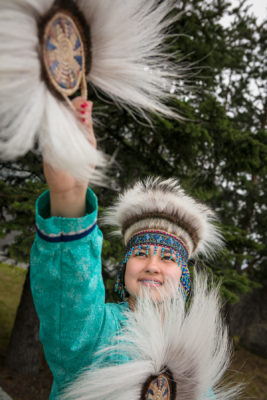
We provide:

  • Technical assistance and training
  • Ensuring State recognition of VAWA compliant protective orders
  • Supporting opportunities to collaborate with State agencies
  • Resource identification
  • Resource development including:
    • Alaska-specific victim-centered model codes
    • Model forms and agreements
    • Tribal court implementation handbook
    • Tribal court resource database
    • Services catalog

For more information, please contact our Tribal Justice Support team.

Resources for Tribal Justice

FAQs

Alaska Tribes are sovereign nations and can structure their governments as they see fit. They resolved disputes between their citizens long before outside contact. Tribes retain this power, or original sovereignty, to this day and continue to have the authority to govern their own affairs. As the United States Supreme Court stated in United States v. Wheeler, “the powers of Indian tribes are, in general, inherent powers of a limited sovereignty which has never been extinguished.”

Generally, no. Tribes have customary laws and traditions that can be enforced, including unwritten ones. The federal government requires Tribes to have some written laws and procedures to exercise certain levels of jurisdiction. Written codes may also be helpful for Tribes that regularly convene a tribal court or that are hearing more complex matters.

No. Tribes can rely on their own conflict resolution systems without distinct “courts.” Some Tribes use their tribal councils or convene Elders to decide conflicts. Others send disputes to inter-tribal courts.

No. Tribes use various models for justice systems, and Tribes can form justice systems that align best with their unique needs and cultural values. In John v. Baker, the Alaska Supreme Court affirmed that tribal courts should not be bound by “paternalistic notions of proper procedure,” and that state “courts should strive to respect the cultural differences that influence tribal jurisprudence.”

Plenty of Tribes have tribal courts that closely resemble the structure and procedure of state and federal courts. However, Tribes can structure their justice systems to meet their unique needs. Examples in Alaska include:

Tlingit & Haida’s Youth Healing to Wellness Court, a diversionary program incorporating restorative justice values for youth facing substance abuse issues;

Kake Circle Peacemaking, a system focused on healing harm within the community instead of the western punitive system; and

Kenaitze Indian Tribe’s Ts’iłq’u Circle, a similar diversionary justice system that allows youth to have difficult conversations and repair harm caused within their communities.

Tribes have a broad ability to exercise civil and criminal jurisdiction over Natives and, in some instances, non-Natives in their Villages. This allows tribal courts to handle a wide variety of cases relating to their tribal citizens, including adoptions, child protection, custody, probate, and crimes such as domestic violence and juvenile delinquency issues.

Tribal civil jurisdiction means the Tribe has the authority to hear cases in which there is no likely possibility of parties serving jail time. This includes cases involving two private parties (such as parental custody cases or protective order cases) as well as cases brought by a Tribe against a private party or parties (such as child protection cases). All decisions in these cases are “civil” in nature, meaning the parties are ordered to take a certain action or make restitution of some type.

Criminal jurisdiction means the case can result in the incarceration of a party to the case and the case is brought by the Tribe against a party or parties. At this time, Alaska Tribes predominately exercise civil jurisdiction. However, they still retain criminal jurisdiction over tribal citizens and other Natives. 

Yes. Alaska Tribes can exercise limited civil jurisdiction over non-Natives. The Alaska Supreme Court has affirmed tribal jurisdiction over non-Native parents of children who are citizens, or eligible for citizenship in that Tribe, in matters related to custody (John v. Baker) and child support (State v. Central Council of Tlingit and Haida Indian Tribes of Alaska). The 2022 Violence Against Women Act (VAWA) reauthorization also affirmed that Alaska Tribes have jurisdiction to issue protective orders against non-Natives related to acts arising within their Villages or otherwise within their authority.

The 2022 VAWA reauthorization also created the Alaska Pilot Project, which allows Alaska Tribes to apply to exercise limited criminal jurisdiction over non-Natives who commit certain violent crimes within their Villages—including protective order violations and domestic violence. This is called Special Tribal Criminal Jurisdiction (STCJ).

Under 25 USC § 1305(c), Alaska Tribes may apply to join the Alaska Pilot Project by contacting the Office on Violence Against Women. This pilot project allows Tribes to work toward exercising Special Tribal Criminal Jurisdiction (STCJ) over all individuals within their Villages. The Alaska Inter-Tribal Technical Assistance Working Group (AK ITWG) helps Tribes meet the requirements necessary to exercise STCJ.

Under VAWA, states, territories, and Tribes must provide the same “full faith and credit” to protective orders issued by courts of another jurisdiction as they would their own. This means that they will treat those protective orders as valid and fully enforce them. However, the Alaska Department of Law has clarified that state law enforcement cannot enforce a provision of a tribal protective order that banishes an individual from a community. But state law enforcement will enforce the remaining portions of a protective order that includes a banishment provision.

PL 280 is a federal law that transferred civil and criminal jurisdiction over Indian Country in some states from the federal government to state governments (including Alaska). The Alaska Supreme Court clarified in State v. Native Village of Tanana and other cases that PL 280 did not divest Tribes of their inherent sovereignty and that it confers concurrent jurisdiction between state and tribal governments. Additionally, the United States Department of Justice clarified in a 2023 memo that “Congress recognizes and affirms the inherent authority of any Indian tribe occupying a Village in the State to exercise criminal and civil jurisdiction over all Indians present in the Village.”

When both a state and a tribal court have jurisdiction over a case, that is called “concurrent jurisdiction.” Several factors may be considered when trying to establish which court should retain jurisdiction including, but not limited to, who filed which case first, whether the case involves tribal law or other tribal cultural matters, the tribal citizenship status of the parties, and the resources expended by the courts and parties in each case.

It is ultimately up to the state and tribal court judges to communicate with one another and decide which court will dismiss its case. ANJC may consult with Tribes in cases where concurrent jurisdiction might be involved and can provide best practices on how to proceed. This includes reviewing Tribes’ existing laws and codes to ensure that they have proper jurisdiction over the subject and parties to a case.

Who is eligible
Alaska Tribes
Service area
Statewide

Questions

Contact ANJC for eligibility questions or to complete an application for services.

Contact Form

quick & easy

Receive News from ANJC Tribal Services
Sign up to receive legal and policy updates and training announcements from ANJC.

Send Us Your Message

Scroll to Top